


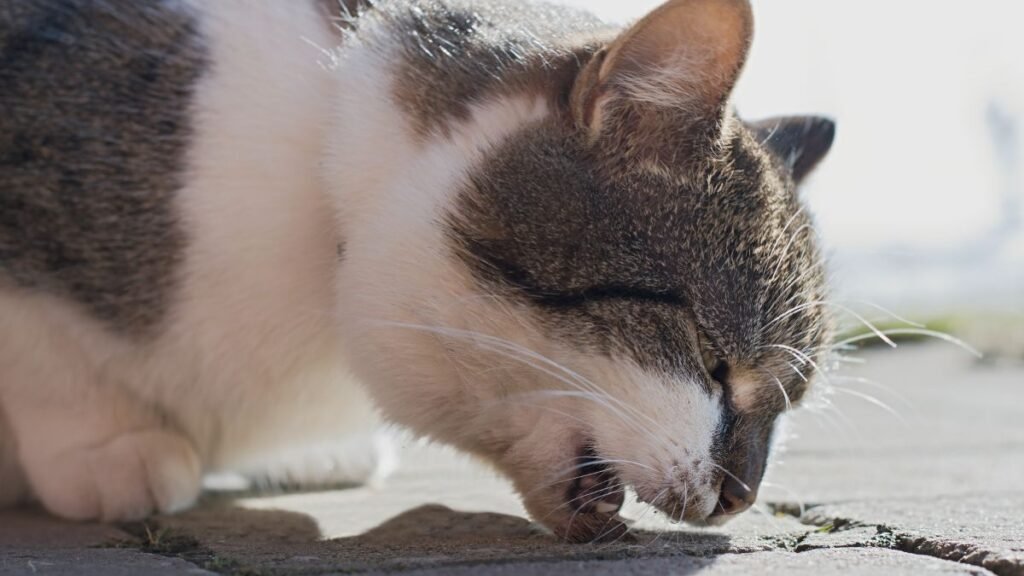
Your cat vomits once after eating too quickly, then walks away, washes her face, and asks for dinner as usual.
That is very different from a cat that vomits repeatedly, refuses food, hides under the bed, and seems weak.
Both cats are vomiting, but their level of risk is very different.
Vomiting is a symptom, not a diagnosis. It can happen after a minor stomach upset, but it can also occur with intestinal obstruction, kidney disease, hyperthyroidism, pancreatitis, parasites, toxins, inflammatory gastrointestinal disease, and other medical problems. Persistent or recurrent vomiting warrants veterinary evaluation to identify the cause rather than simply suppressing the symptom.
The most useful question is not simply, “How do I stop my cat from vomiting?”
It is: “Does my cat look well enough to monitor for a short time, or are there signs that something more serious is happening?”
If Your Cat Is Vomiting Right Now
A single episode of vomiting in an otherwise healthy adult cat that remains bright, comfortable, interested in food, and able to drink may sometimes be monitored closely at home.
The situation changes when vomiting is repeated or is accompanied by other signs of illness.
Seek veterinary care promptly if your cat:
- Vomits repeatedly or cannot keep water down
- Has blood in the vomit
- Is markedly lethargic, weak, collapsed, or unusually withdrawn
- Refuses food or shows a major decrease in appetite
- Appears painful or has a distended abdomen
- Has vomiting together with significant diarrhea
- Seems dehydrated
- May have swallowed string, ribbon, thread, plastic, or another foreign object
- May have been exposed to a toxin, medication, poisonous plant, or chemical
- Repeatedly retches or tries to vomit without bringing anything up, especially if distressed or painful
- Is a kitten, senior cat, or has an existing medical condition and appears unwell
Do not wait for a particular number of vomiting episodes if your cat is clearly getting worse.
What Is Vomiting in Cats?
True vomiting is the active, forceful expulsion of material from the stomach or upper gastrointestinal tract.
Before vomiting, a cat may:
- lick the lips
- drool
- swallow repeatedly
- appear restless
- crouch
- retch
- have forceful abdominal contractions
The expelled material may include food, liquid, foam, bile, hair, or occasionally blood.
Recognizing true vomiting matters because owners sometimes use the word “vomiting” for several very different events.
Vomiting vs. Regurgitation
Regurgitation is not the same as vomiting.
| Feature | Vomiting | Regurgitation |
|---|---|---|
| Abdominal contractions | Usually present | Usually absent |
| Retching | Common | Usually absent |
| Nausea beforehand | May occur | Usually absent |
| Material | Partly digested food, liquid, bile, foam | Often undigested food |
| Timing | Variable | Often shortly after eating |
| Shape | Variable | May be tubular or cylindrical |
Regurgitation is generally more passive because material comes from the esophagus rather than being forcefully expelled from the stomach.
A video of the episode can be extremely useful to your veterinarian if you are unsure which is happening.
Why Is My Cat Vomiting?
There is no single cause.
Some explanations are relatively minor. Others require urgent treatment.
| Possible cause | What you may notice |
|---|---|
| Eating too quickly | Vomiting or regurgitation soon after eating; otherwise normal behavior |
| Sudden diet change | Vomiting or diarrhea after changing food |
| Dietary indiscretion | Signs after spoiled food, table food, plants, insects, or another unusual item |
| Hairballs | Hair within the expelled material |
| Food intolerance | Recurrent vomiting associated with diet |
| Parasites | Vomiting with diarrhea, poor growth, or other GI signs |
| Constipation | Vomiting, reduced stool production, straining |
| Foreign body | Repeated vomiting, appetite loss, pain, lethargy |
| Toxin exposure | Sudden vomiting with other systemic signs |
| Pancreatitis | Reduced appetite, lethargy, vomiting, sometimes weight loss |
| Chronic intestinal disease | Recurrent vomiting, diarrhea, appetite changes, weight loss |
| Kidney disease | Vomiting with appetite loss, weight loss, drinking/urination changes |
| Hyperthyroidism | Often weight loss despite appetite changes; vomiting may occur |
| Liver disease | Poor appetite, vomiting, lethargy, possible jaundice |
| Cancer | Persistent signs, appetite changes, weight loss |
| Infection | Vomiting with fever, lethargy, diarrhea, or poor appetite |
That is why “my cat is vomiting” does not have one universal treatment.
What the Vomit Looks Like Can Provide Clues
Appearance can help describe the problem to your veterinarian, but color or consistency alone cannot diagnose the cause.
If practical, take a photo before cleaning it up.
Cat Vomiting Undigested Food
Food that still looks largely unchanged may appear when a cat eats quickly or vomits soon after a meal.
But if food repeatedly comes back up immediately after eating with little abdominal effort, the event may be regurgitation rather than vomiting.
Repeated episodes should be investigated.
Cat Vomiting White Foam
White or clear foam may be saliva mixed with gastric fluid.
It can occur when the stomach contains little food, but it is nonspecific.
Repeated foamy vomiting accompanied by appetite loss, lethargy, pain, diarrhea, or other abnormalities deserves veterinary assessment.
Cat Vomiting Yellow Liquid or Bile
Yellow or yellow-green fluid often contains bile.
One isolated episode does not establish a diagnosis. Recurrent bile vomiting can occur with several gastrointestinal or systemic problems.
Watch the cat, not just the color.
Cat Vomiting Clear Liquid
Clear fluid may represent swallowed water, saliva, or gastric secretions.
If your cat repeatedly drinks and then vomits the water back up, veterinary assessment becomes more urgent because maintaining hydration may be difficult.
Cat Vomiting Hairballs
Cats naturally swallow hair while grooming.
Occasional hairballs can happen, but frequent vomiting should not automatically be dismissed as “just hairballs.”
Recurrent unproductive retching, appetite loss, lethargy, or repeated vomiting can indicate a gastrointestinal problem or, less commonly, obstruction related to hair or another material.
Cat Vomiting Blood
Blood is a red flag.
Fresh blood may appear bright red. Partially digested blood may look darker or resemble coffee grounds.
Contact a veterinarian promptly, particularly if there is repeated vomiting, weakness, poor appetite, abdominal pain, black stool, or significant bleeding.
My Cat Vomited Once but Is Acting Normal. What Should I Do?
This is one of the most common situations.
If an otherwise healthy adult cat vomits once but remains alert and comfortable, continues to eat and drink normally, urinates normally, has no diarrhea, and does not vomit again, close observation may be reasonable.
Keep a record of:
| What to monitor | Why it matters |
|---|---|
| Number of vomiting episodes | Repetition changes the level of concern |
| Appetite | Appetite loss is particularly important in cats |
| Water intake | Helps assess hydration risk |
| Energy and behavior | Hiding or lethargy may signal illness |
| Stool | Diarrhea or black stool changes the picture |
| Urination | Changes may suggest systemic disease |
| Appearance of vomit | Food, bile, foam, blood, hair or foreign material |
| Timing | Before food, after food, overnight, recurrent pattern |
A pattern often matters more than one isolated event.
Should You Withhold Food From a Vomiting Cat?
Do not automatically impose a prolonged fast on every vomiting cat.
Older recommendations frequently advised fasting pets with gastrointestinal upset. More recent veterinary nutrition guidance emphasizes that the gastrointestinal tract still needs nutrition during recovery and that prolonged food restriction is not appropriate for every patient.
This matters particularly in cats.
Cats that eat little or nothing for a prolonged period can develop serious metabolic complications, including hepatic lipidosis, with overweight cats at particular risk.
For a stable cat that is no longer vomiting, small, frequent amounts of an appropriate, easily digestible food may be better tolerated than a large meal.
If your cat refuses food, continues vomiting, or cannot keep food down, call your veterinarian.
What Should You Feed a Cat After Vomiting?
There is no single “bland diet” that is best for every cat.
A veterinary gastrointestinal diet is often preferable when dietary management is appropriate because these diets are formulated to be highly digestible and nutritionally complete.
Small, frequent meals are often easier to tolerate during recovery than a single large meal.
Avoid introducing several unfamiliar foods at once simply because your cat has vomited.
In selected short-term cases, a veterinarian may recommend a home-prepared diet, but homemade diets are not automatically complete and balanced.
A cat with kidney disease, food allergy, pancreatitis, diabetes, chronic intestinal disease, or another condition may need a very different nutritional strategy.
Should Water Be Available?
In most cases, water access matters because repeated vomiting can cause dehydration.
Do not deliberately deprive a vomiting cat of water for prolonged periods without veterinary instruction.
If your cat repeatedly vomits after drinking or cannot keep even small amounts of water down, contact a veterinarian promptly.
Such cats may need anti-nausea treatment and fluid therapy rather than continued attempts to manage the problem at home.
Do Not Give Human Medication Without Veterinary Advice
Do not use medication from your own medicine cabinet simply because your cat is vomiting.
Human painkillers, gastrointestinal medications, and other drugs can be dangerous in cats or inappropriate for the underlying disease.
Never give a cat medication unless your veterinarian has confirmed the drug is appropriate, the dose is appropriate, and the underlying problem does not make it unsafe.
Do not attempt to make a cat vomit after a suspected poisoning unless a veterinarian or animal poison specialist specifically instructs you to do so.
Cat Vomiting and Diarrhea Together
Vomiting and diarrhea together increase the potential for fluid and electrolyte loss.
A mild, short-lived digestive upset is possible, but the combination can also occur with infections, parasites, toxins, dietary indiscretion, inflammatory gastrointestinal disease, pancreatitis, and systemic illness.
A cat with both vomiting and diarrhea that remains alert, responsive, and well hydrated still needs close monitoring.
A cat that develops repeated vomiting, frequent diarrhea, blood, weakness, appetite loss, dehydration, or pain should be assessed promptly.
Young kittens deserve particular caution.
Vomiting in Kittens Deserves Extra Attention
Kittens have less reserve than healthy adult cats.
Vomiting in a kitten is more concerning when combined with:
- diarrhea
- lethargy
- poor appetite
- dehydration
- fever
- abdominal pain
Parasites are common in young cats.
Feline panleukopenia is another important concern in susceptible kittens and can cause vomiting, diarrhea, profound lethargy, appetite loss, and severe dehydration.
Do not wait for a sick kitten to become severely dehydrated before seeking help.
Older Cats With New Vomiting Should Not Be Ignored
Repeated vomiting in an older cat should not automatically be blamed on a “sensitive stomach.”
Diseases that become more common with age — including kidney disease, hyperthyroidism, gastrointestinal disease, and cancer — can all present with vomiting.
Weight loss is particularly important.
A cat that has “always vomited” but is now losing weight, eating differently, drinking more, or vomiting more frequently deserves investigation.
Chronic vomiting is not automatically normal just because it has been happening for a long time.
When Should You Call the Vet?
For a healthy adult cat with a single isolated episode and no other abnormalities, observation may be reasonable.
Call your veterinarian sooner rather than later if vomiting:
- repeats
- persists into the following day
- becomes more frequent
- is associated with reduced appetite
- occurs with diarrhea
- occurs with weight loss
- occurs with changes in drinking or urination
- is accompanied by lethargy or hiding
- contains blood
- follows possible toxin exposure
- follows possible foreign-body ingestion
Do not wait for an arbitrary time limit if your cat is getting worse.
What Will the Veterinarian Want to Know?
A useful history can narrow the list of possible causes substantially.
Be prepared to tell your veterinarian:
- when the vomiting started
- how frequently it occurs
- whether it follows meals
- whether the material is food, liquid, foam, bile, hair, or blood
- whether the event involves abdominal contractions
- whether appetite has changed
- whether your cat has lost weight
- whether diarrhea or constipation is present
- whether drinking or urination has changed
- whether your cat goes outdoors
- parasite-prevention and deworming history
- medication and supplement use
- possible access to string, plants, medicines, toxins, or foreign objects
- recent diet changes
Bring photos or videos if available.
Do not pull visible string or thread from a cat’s mouth or rectum. Linear foreign bodies can become anchored internally and cause serious intestinal injury.
How Is Cat Vomiting Diagnosed?
The investigation depends on your cat’s age, medical history, frequency of vomiting, physical examination findings, and accompanying symptoms.
Your veterinarian may begin with:
- physical examination
- hydration assessment
- weight and body-condition evaluation
- blood tests
- urinalysis
- fecal or parasite testing
Depending on the findings, additional testing may include:
- abdominal X-rays
- ultrasound
- thyroid testing
- pancreatic testing
- infectious-disease testing
- endoscopy
- gastrointestinal biopsies
The goal is to identify why the cat is vomiting, not simply to suppress the symptom.
How Is Cat Vomiting Treated?
Treatment depends entirely on the cause and severity.
A mildly affected cat may need only dietary support and monitoring.
A dehydrated cat may need fluid therapy.
Persistent nausea may require prescription antiemetic medication.
Parasites require appropriate antiparasitic treatment.
Kidney disease, hyperthyroidism, pancreatitis and chronic intestinal disease each require different management.
An intestinal foreign body may require endoscopic or surgical removal.
A poisoned cat may require emergency supportive treatment and, for certain toxins, a specific antidote.
There is therefore no single “best medicine for cat vomiting.”
The right treatment addresses the underlying problem.
How Long Does Cat Vomiting Last?
A mild acute gastrointestinal disturbance may improve within a day or two.
What matters most is whether your cat is improving or worsening.
A cat that vomited once yesterday, ate small meals overnight, and is now acting normally is very different from a cat that initially vomited once but is now vomiting every few hours and refusing food.
Repeated episodes over weeks or months should not simply be managed as unrelated “upset stomachs.”
Chronic or recurrent vomiting deserves a diagnosis.
Can You Reduce the Risk of Vomiting?
Not every episode can be prevented, but several measures can reduce avoidable risks:
- make diet changes gradually
- store human medications securely
- keep toxic plants and chemicals inaccessible, and avoid feeding foods that are unsafe for cats
- prevent access to string, ribbon, yarn, rubber bands and small objects
- maintain appropriate parasite prevention
- keep vaccinations current
- groom long-haired cats regularly
- use feeding strategies that discourage rapid eating when relevant
- monitor older cats for weight and appetite changes
- discuss recurrent hairballs or vomiting with your veterinarian
If your cat has recurrent episodes, keeping a simple record of meals, vomiting, stool, medications, and weight can reveal patterns that would otherwise be easy to miss.
Frequently Asked Questions
Why is my cat vomiting but acting normal?
An otherwise healthy cat may have a single episode caused by a minor dietary upset, eating too quickly, a hairball, or another short-lived gastrointestinal problem. If vomiting recurs, persists, or is accompanied by appetite loss, weight loss, diarrhea, lethargy, or another change, contact your veterinarian.
Why does my cat throw up undigested food?
Food can be expelled shortly after eating if a cat eats very quickly, but repeated episodes may represent either vomiting or regurgitation. Video can help your veterinarian distinguish between the two.
Why does my cat vomit immediately after eating?
Possible explanations include eating too quickly, regurgitation, gastrointestinal disease, or another medical problem. If it happens repeatedly, it should be investigated rather than assumed to be caused by fast eating.
Why is my cat vomiting white foam?
White foam usually consists of saliva and gastric secretions, often when little food remains in the stomach. Its appearance does not identify the underlying cause. Repeated vomiting or additional symptoms warrant veterinary advice.
Why is my cat vomiting yellow liquid?
Yellow material may contain bile. A single episode may be minor, but recurrent vomiting of bile can occur with several gastrointestinal or systemic diseases. The cause cannot be diagnosed from color alone.
Is a hairball normal?
Occasional hairballs can occur because cats swallow hair while grooming. Frequent hairballs, repeated vomiting, unproductive retching, appetite loss, or lethargy should not automatically be considered normal.
What can I give my cat for vomiting?
Do not give human medication without veterinary advice. For a stable cat whose vomiting has stopped, your veterinarian may recommend small, frequent meals of an easily digestible diet. Repeated vomiting requires assessment because treatment depends on the cause.
How long can a cat go without eating after vomiting?
Cats should not undergo prolonged fasting without veterinary guidance. Appetite loss can have serious health consequences, particularly in overweight cats. If your adult cat refuses food for about 24 hours, or sooner if your cat is a kitten, is vomiting repeatedly, or otherwise seems unwell, contact your veterinarian.
When is cat vomiting an emergency?
Seek urgent veterinary care for repeated vomiting, inability to keep water down, marked weakness, collapse, blood in vomit, severe abdominal pain, suspected poisoning or foreign-body ingestion, significant dehydration, or vomiting in a sick kitten.
References
- Merck Veterinary Manual — definition of vomiting, vomiting vs. regurgitation, causes, diagnostic evaluation, and red-flag signs
- Cornell Feline Health Center — recurrent vomiting, underlying diseases, diagnostic approach, and indications for veterinary assessment
- VCA Animal Hospitals — urgent warning signs, monitoring, diagnostic evaluation, treatment, and hydration
- VCA Animal Hospitals — current nutrition guidance during gastrointestinal upset and limitations of traditional homemade bland diets
- Cornell Feline Health Center — why sustained appetite loss can become medically important in cats, particularly overweight cats
- American College of Veterinary Surgeons — clinical signs and risks of linear foreign bodies such as string